


Dublin Tallaght
- A Cardiac Computed Tomography (CT) scan is a non-invasive, painless imaging scan of the heart and its blood vessels. This technology allows doctors to see the coronary (heart) arteries, heart chambers and surrounding structures in detail.
CT Coronary Angiograms: This type of scan uses contrast dye injected into a vein in your arm to highlight the coronary arteries. It’s used to check for any blocked arteries.
Calcium score scan: This type of scan is used to measure the amount of calcium build up in the coronary arteries.
- Experiencing Chest Pain
- Your Dr suspected coronary artery disease
- Assess Calcium Buildup in the Coronary Arteries
- Evaluate the Heart Valves for a surgeon to review prior to heart surgery
Depending on the type of scan, you may need to require an injection of contrast medium(dye) to improve detail in the area being scanned and a cannula will be placed in a vein in your arm. Before the scan, a radiographer will check your heart rate. Optimal diagnostic imaging requires a consistent heart rate. Should the heart rate be too high or irregular. a small beta-blocker pill will be given to help lower it temporarily for the scan. It makes take over an hour for your heart rate to lower after taking the beta blocker, and you should expect to be in the clinic for 2-3 hours in total.
You may also need to have a spray under your tongue of a drug called GTN to help dilate the arteries.
When you arrive at the clinic you will be asked to complete forms relating to your scan
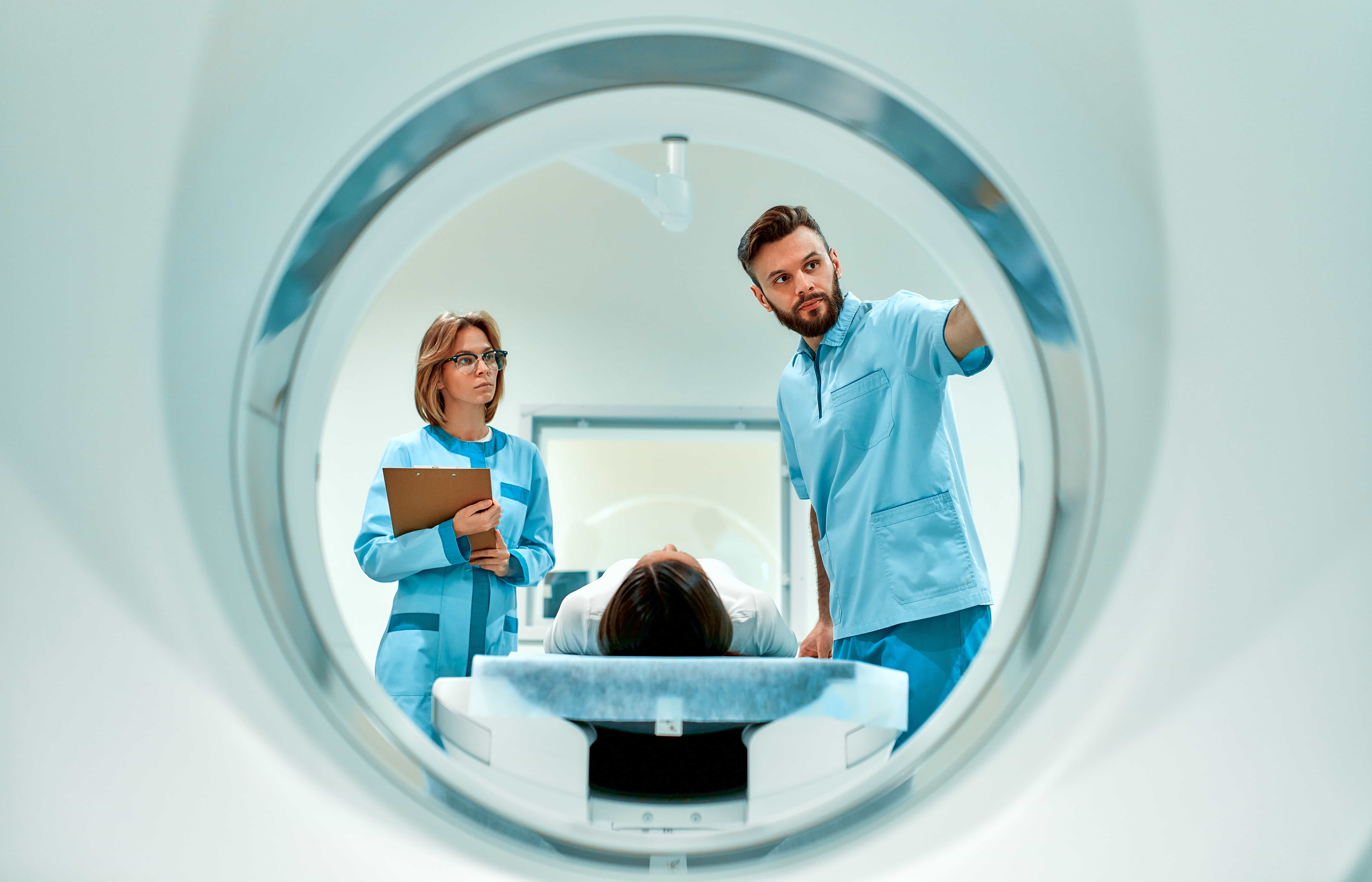
You will lie on a cushioned table that slides into a CT scanner. The scanner will be taking multiple X-ray images of your heart. The radiographer will be observing you throughout the examination which will only take a few minutes to complete once you are in the scanning room. Depending on if you had contrast, beta blockers or GTN spray, you would stay in the clinic for observation for between 15 minutes and 1 hour.
The Radiologist will analyse the scan and issue a report to your referring clinician detailing the results of the scan.
Dublin Tallaght
- A Cardiac Computed Tomography (CT) scan is a non-invasive, painless imaging scan of the heart and its blood vessels. This technology allows doctors to see the coronary (heart) arteries, heart chambers and surrounding structures in detail.
CT Coronary Angiograms: This type of scan uses contrast dye injected into a vein in your arm to highlight the coronary arteries. It’s used to check for any blocked arteries.
Calcium score scan: This type of scan is used to measure the amount of calcium buildup in the coronary arteries.
- Experiencing Chest Pain
- Your Dr suspected coronary artery disease
- Assess Calcium Buildup in the Coronary Arteries
- Evaluate the Heart Valves for a surgeon to review prior to heart surgery
Depending on the type of scan, you may need to require an injection of contrast medium(dye) to improve detail in the area being scanned and a cannula will be placed in a vein in your arm. Before the scan, a radiographer will check your heart rate. Optimal diagnostic imaging requires a consistent heart rate. Should the heart rate be too high or irregular. a small beta-blocker pill will be given to help lower it temporarily for the scan. It makes take over an hour for your heart rate to lower after taking the beta blocker, and you should expect to be in the clinic for 2-3 hours in total.
You may also need to have a spray under your tongue of a drug called GTN to help dilate the arteries.
When you arrive at the clinic you will be asked to complete forms relating to your scan
You will lie on a cushioned table that slides into a CT scanner. The scanner will be taking multiple X-ray images of your heart. The radiographer will be observing you throughout the examination which will only take a few minutes to complete once you are in the scanning room. Depending on if you had contrast, beta blockers or GTN spray, you would stay in the clinic for observation for between 15 minutes and 1 hour.
The Radiologist will analyse the scan and issue a report to your referring clinician detailing the results of the scan.


